Plasterers Trowels

Choosing Plasterers Trowels: Size, Blade and Handle
Most plasterers trowels fall between 11 and 18 inches in blade length, and the right size depends on the job. A 13 inch blade is the usual all-rounder for walls. Go to 16 or 18 inches for large ceilings and skim coats, where a long blade gives a flatter finish with fewer overlap lines.
Width matters too. Most blades are about 4.5 inches wide, which suits one-handed work and keeps wrist strain reasonable over a full day. Wider blades cover more but tire the arm faster, so beginners do better with 13 or 14 inches.
Stainless steel or carbon steel
Stainless steel blades resist rust and are ready to use almost straight away. They are the sensible choice for most DIY users, because a trowel left damp overnight will not stain your plaster grey. Carbon steel blades start stiffer and rougher, and a good plasterer will break them in over a week or two of use until they polish up. Once worn in, many professionals prefer them. They do rust quickly, so wipe and oil them after every job.
Handles
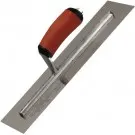
Wood handles are traditional and feel warm in the hand. Soft-grip and rubberised handles, such as the Durasoft type on the Marshalltown finishing trowel shown above, absorb vibration and stay comfortable when your hands are wet. Look for a handle that sits slightly above the blade, so your knuckles clear the wall.
Types of Trowel for Plastering Work
A finishing trowel is the one most people picture. It has a flat, rectangular blade with rounded or square ends. Square ends reach into corners more easily, while rounded corners are kinder to beginners because they are less likely to dig in and leave tracks.
Other shapes have their own jobs.
- Pointing and small tools, usually 4 to 6 inches, for patching and repairs.
- Midget or corner trowels, for internal and external angles.
- Gauging trowels, for mixing small batches and filling holes.
- Flexible plastic or polyurethane trowels, for modern thin-coat and acrylic finishes.
If you are patching a few cracks, a single 11 inch trowel and a small pointing tool are enough. For a whole room, you need a 13 or 14 inch finishing trowel plus a hawk to hold the plaster. The wider trowels range also covers brick and tile tools, which are shaped differently and should not be used for plaster.
How Much Do Plasterers Trowels Cost?
Prices vary a lot. Budget trowels start at around £8 to £12 and are fine for occasional repairs. Mid-range stainless steel models from established makers usually cost about £20 to £35. Professional trowels with forged blades and quality handles can reach £45 or more.
Spending a little extra makes sense if you are skimming a whole room. A cheap blade that is slightly bowed will leave ridges that no amount of technique can fix. Hold the blade up to the light or lay it on a flat surface. Any visible gap along the edge is a warning sign.
Breaking In and Looking After a Trowel
New carbon steel trowels often have sharp, square edges that scratch fresh plaster. Round the corners lightly with fine wet-and-dry paper (around 240 grit) and work the blade in on a spare piece of board. It takes about 20 minutes. Stainless blades usually need only a quick check of the edges.
Clean the blade straight after use. Plaster that sets on the steel will pit it, and you will see the marks in your next skim. Rinse in clean water, dry fully, and store flat or hung by the handle. Never use a good finishing trowel to scrape old plaster or chip off dried material.
Plastering Trowels Beyond the Wall
Some jobs near plastering call for different tools altogether. Groundwork in the garden, such as lifting turf before a patio base goes in, needs something like a turf cutting iron rather than any kind of trowel. Wider DIY needs, including hammers, chisels and scrapers for preparing walls, are listed in the hand tools range.
Good preparation saves more time than any trowel. Remove loose plaster, fill deep holes, and apply a bonding agent on very absorbent or painted surfaces.
Frequently Asked Questions
What size plasterers trowel should a beginner buy?
A 13 or 14 inch stainless steel finishing trowel is a good starting point. It is large enough to cover a wall at a decent pace, yet light enough to control. Move up to 16 inches once your technique is steady.
Can I use a bricklaying trowel for plaster?
You can for small patches, but the results will be poor. Brick trowels have a pointed, thick blade made for lifting mortar, not for spreading a flat, thin coat. A flat finishing trowel gives a far smoother surface.
How do I stop my trowel leaving lines in the plaster?
Keep the blade at a shallow angle, about 10 to 15 degrees, and lightly dampen the surface as the plaster firms up. Work in overlapping passes and avoid pressing hard at the edges. Check that the blade is flat and the corners are rounded.
Is a plastic trowel better than a steel one?
It depends on the material. Flexible plastic trowels suit thin acrylic and some pre-mixed finishes, and they do not rust. Traditional gypsum plaster is still best finished with steel, which polishes the surface as it sets.
How long does a good plasterers trowel last?
With regular cleaning, a quality stainless steel trowel can last 5 to 10 years of heavy use. DIY users may keep one for decades. The blade wears thinner over time, so replace it once the edges no longer sit flat.